Laser hair removal has moved from a niche dermatology procedure to a mainstream grooming treatment trusted by people who want consistent, low-maintenance smoothness. I have seen busy professionals book underarm laser hair removal during lunch breaks and triathletes rely on leg laser hair removal to simplify training. The treatment has matured, the technology is better understood, and the results are more predictable than they were a decade ago. Still, the details matter: your skin tone, hair color, hormonal profile, device type, and the skill of the laser hair removal specialist all influence outcomes. If you understand those levers, you can choose a laser hair removal clinic or center with confidence and set realistic expectations for your series of sessions.
How the laser hair removal procedure actually removes hair
Every laser hair removal treatment relies on selective photothermolysis. A controlled pulse of light targets melanin in the hair shaft and follicle. The light energy converts to heat, damaging the follicle structures that drive hair growth. Hairs in the anagen or growth phase are most susceptible, which is why one session never clears everything. You will need a sequence of laser hair removal sessions spaced out to catch new follicles as they cycle into anagen.
Modern devices used in professional laser hair removal include three common wavelengths:
- Alexandrite at 755 nm, efficient for lighter skin tones with dark hair and finer facial hair. Diode at 800 to 810 nm, the workhorse for a wide range of skin types, often favored for large body areas in full body laser hair removal. Nd:YAG at 1064 nm, safer for darker skin because it penetrates deeper and is less absorbed by epidermal melanin.
If your provider talks about spot size, pulse width, and fluence, that is good. Larger spot sizes clear large areas faster and penetrate a bit deeper, while appropriate pulse widths help protect skin. Fluence, measured in J/cm², must be high enough to injure the follicle yet not so high that the skin blister or pigment changes. An experienced laser hair removal technician or dermatologist adjusts these on the fly, guided by hair thickness, body area, and your skin response during test pulses.
What permanent means in permanent laser hair removal
The phrase permanent laser hair removal is common in marketing, but in clinic we use permanent hair reduction laser more often. Expect a significant and lasting reduction in hair count and thickness rather than a guarantee that no hair will ever return. The American consensus is pragmatic: most people see 70 to 90 percent reduction after a complete laser hair reduction treatment plan, with mild regrowth that is finer and lighter. Maintenance sessions once or twice a year keep results stable, especially in hormonally sensitive areas like the face, chest, and lower abdomen.
I have patients who did their first course eight years ago and still feel hair-free day to day, touching up perhaps every 12 to 18 months. Others with conditions like PCOS or those on testosterone may need more frequent laser hair removal maintenance sessions. The point is not chasing an unrealistic promise but designing a laser hair removal hair reduction program that fits your biology and habits.
Who is a good candidate, and how device choice matters
The best laser hair removal results happen when there is high contrast between hair and skin: dark hair on light skin is ideal. That said, safe laser hair removal is available for almost every skin type today, from Fitzpatrick I to VI. The device and parameters shift with your type.
- Laser hair removal for light skin with coarse black or brown hair tends to be straightforward. Alexandrite or diode lasers can run efficient settings, meaning shorter treatment times and fewer sessions. Upper lip laser hair removal and chin laser hair removal in this group often clear quickly, though facial hair may still need maintenance due to hormones. Laser hair removal for dark skin benefits from Nd:YAG technology, which places the energy deeper in the dermis and bypasses much of the epidermal melanin. Cooling and longer pulse durations reduce risk of burns or hyperpigmentation. Expect slightly more sessions and conservative test spots. Underarm laser hair removal, bikini laser hair removal, and brazilian laser hair removal are popular in this group because the skin is sensitive and the hair is often coarse enough for excellent pickup. Red, blond, white, or gray hair contains less melanin, so lasers struggle. Some clinics offer alternative modalities like electrolysis for stubborn light hairs, especially on the face. A combined approach in a laser hair removal clinic treatment plan might use laser for 80 percent of the field and electrolysis for the residual pale hairs. Sensitive skin and eczema are not automatic disqualifiers. Laser hair removal for sensitive skin is often successful if the skin is stable and not actively inflamed. Expect lower starting fluences and closer monitoring for post-treatment redness that lingers beyond the typical 24 to 48 hours. Thick or coarse hair responds well. Laser hair removal for thick hair or laser hair removal for coarse hair on the back, chest, or legs tends to show dramatic hair reduction by the third or fourth session. The trade-off is that the first pass can feel intense because more melanin equals more heat.
Women, men, and the body areas that behave differently
Laser hair removal for women often targets the lower legs, underarms, bikini line, upper lip, and chin. Hormonal fluctuations can nudge facial hair regrowth, so maintenance is common. Leg laser hair removal is where I see some of the most satisfying before and after images because the contrast makes clearance obvious and the weekly shaving nicks vanish.
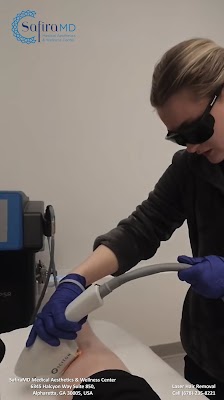
Laser hair removal for men often focuses on back laser hair removal, chest laser hair removal, neck laser hair removal, and stomach laser hair removal. The back and shoulders sometimes show incremental regrowth a couple years later due to dormant follicles activating with age. A quick follow up session once or twice a year curbs that.
Brazilian laser hair removal deserves a note. Full clearance in the pubic region involves both labial or scrotal skin and perineal folds with varying hair density and skin sensitivity. Cooling, patient-controlled pauses, and good communication make the experience tolerable. For many, this single service saves the most ongoing effort because ingrown hairs, razor bumps, and waxing irritation vanish.
What a typical laser hair removal treatment plan looks like
Most areas require 6 to 10 laser hair removal sessions, spaced 4 to 8 weeks apart, depending on the body site and the speed of your hair cycle. Face and neck grow faster, so sessions might be every 4 weeks. Legs and back move slower, so 6 to 8 weeks spacing fits. Expect the first session to reduce bulk and dent the thickest hairs. The second and third often feel like the big wins with visible laser hair removal results. By sessions five and six, you are polishing off sparser regrowth, and we increase attention to stragglers on the margins.
Session timing is not a hard calendar rule. If your legs look quiet at 6 weeks, pushing to 7 or 8 gives a better anagen yield. This is where a laser hair removal specialist helps. Someone who only follows a rigid protocol may miss the nuances of your cycle.
For full body laser hair removal, we Alpharetta GA laser hair removal split the work into two or three appointments per cycle to avoid overexposure and to manage numbness from prolonged contact cooling. A full pass from shoulders to toes can take 2 to 3 hours on a diode platform with a large spot size. Splitting upper and lower body by alternating weeks keeps the skin happy.
What it feels like, and what painless really means
Painless laser hair removal is a tempting phrase, but the reality is more like quick snaps or heat pinches, varying by area and device. Underarms and bikini tend to feel sharper than forearms or thighs. Modern machines pair contact cooling, chilled air, or cryogen sprays to numb the surface. On diode platforms that use in-motion techniques, the sensation is a wash of warmth that surges in short bursts as the operator stacks energy. Most patients rate it between a 2 and 6 on a 10-point scale, with coarser hair clustering higher early on, then tapering down by the third session.
Topical anesthetic is optional for sensitive zones. It must be applied correctly and removed before treatment to avoid light scattering and hot spots. If your clinic offers it as a default for every area, ask why. Overuse can mask parameters that are too aggressive and has no benefit on large low-sensitivity areas like calves.
Safety, side effects, and how to protect your skin
Safe laser hair removal comes from three things: a qualified operator, a machine suited to your skin, and your adherence to pre and post-care. The most common temporary effects include perifollicular edema, which looks like tiny goosebumps around the hair after treatment, and pinkness or mild swelling for 12 to 48 hours. Folliculitis-like bumps can appear if sweat or friction triggers irritation in the first day.
Blistering and burns are rare in expert hands but happen more often when recent tanning raises epidermal melanin or when an unsuitable device is used for dark skin. Post-inflammatory hyperpigmentation is more likely with burns and in darker skin types. Good operators test small patches, step up energy gradually, and keep cooling consistent. If you hear a crisp pop and smell singed hair, that is normal. If you feel hot zingers that linger and you see striping or Gridiron patterns, ask for a pause to reassess settings or technique.
Preparation for a clean first pass
Use this short checklist the week before your laser hair removal appointment to reduce variables:
- Shave the area 12 to 24 hours before treatment, leaving a short hair shaft under the skin for the laser to target. Avoid tanning and self-tanners for 2 to 4 weeks prior, including spray tans and bronzing lotions. Stop waxing, plucking, or threading for at least 4 weeks before the first session, and do not resume during the series. Skip active skincare like retinoids, AHAs, BHAs, or benzoyl peroxide on the treatment area for 3 to 5 days before. Inform your provider about antibiotics, isotretinoin, or photosensitizing medications, and reschedule if you have an active infection or open lesions.
Aftercare that preserves results and comfort
Post-treatment care is simple but worth doing well:
- Apply cool compresses or fragrance-free aloe gel for warmth or redness on day one. Avoid hot yoga, saunas, heavy workouts, or tight frictiony clothing for 24 to 48 hours. Use SPF 30 or higher on exposed areas daily and avoid tanning for at least two weeks. Do not pick at any crusting or ingrowns; use a gentle chemical exfoliant only after day three if your provider approves. Shave between sessions if needed, but do not wax or epilate, as those remove the hair target for the next pulse.
What laser hair removal costs and how to evaluate packages
Laser hair removal pricing varies widely by geography, device, and provider credentials. A single small-area session such as upper lip might range from 30 to 100 dollars in many markets. Large areas like full legs can run 150 to 450 dollars per session. Comprehensive full body laser hair removal packages may be quoted as a series, often 6 to 8 sessions, with discounts of 10 to 30 percent compared to buying individually. Some clinics offer laser hair removal deals or a membership with monthly debits that include touch-ups. I prefer packages that spell out exactly how many sessions, what counts as a large vs small area, and transparent add-on pricing for maintenance.
Affordable laser hair removal should not mean bargain-basement oversight. Medical laser hair removal implies a physician, PA, or NP is at least overseeing protocols, even if trained laser hair removal technicians do the hands-on work. Cosmetic laser hair removal in non-medical spas can be excellent if the staff is well trained and the clinic has strict safety standards. Ask who calibrates the laser hair removal machine treatment and how frequently they audit outcomes and complications. The best laser hair removal is delivered by people who track data, not just marketing claims.
Choosing a provider when you search laser hair removal near me
Clicking the first laser hair removal service that appears on a map will not tell you who will handle edge cases well. A good laser hair removal clinic will do a proper laser hair removal consultation, including a skin and hair assessment, a review of medical history, and a test spot at realistic energy. They will talk about whether diode, alexandrite, or Nd:YAG is better for your specific case, not just what machine they happen to own. If you have dark skin, you should hear an explanation of why Nd:YAG is preferred, including lower melanin absorption and deeper penetration. If your hair is fine and light, you should get an honest discussion about limits and whether to blend in electrolysis for facial hairs.
Photos of laser hair removal before and after can be helpful, especially if they are time-stamped and the lighting is consistent. Results that look airbrushed or use white balance trickery are red flags. An experienced laser hair removal expert will be able to explain expected session counts for your body area and outline what the laser hair removal treatment plan looks like if you develop transient folliculitis or ingrowns during the series.
The role of technology, from contact cooling to pulse stacking
Laser hair removal technology has improved in two quiet but important ways. First, the sophistication of cooling. Sapphire-tipped handpieces that hold steady at 0 to 5 degrees Celsius reduce surface discomfort and protect the epidermis. That allows higher fluences safely, especially on coarse hair. Second, pulse control. Many platforms allow microsecond-level shaping of pulse trains. A single long pulse can be broken into a burst of sub-pulses that keep the follicle hot while letting the epidermis cool a beat between pulses. On the diode side, in-motion techniques sweep over the area, gradually heating follicles to the kill zone without sharp spikes in pain.
Marketing terms like painless laser hair removal and advanced laser hair removal usually refer to those two improvements. They matter, but the operator still sets the rules. For example, stacking too many passes while chasing a stubborn patch can overshoot and raise the risk of striping. Conversely, being too timid results in hair that singes at the surface but leaves the bulb unharmed, growing back with the same vigor.
Edge cases and special scenarios you should not ignore
- Hormonal influences: Laser hair removal for facial hair in women with PCOS can be highly effective, but expect maintenance. I often plan an 8-session core with scheduled follow ups every 6 to 12 months. Coordinate with your endocrinologist if you are adjusting medications. Tattoos: Avoid lasering directly over tattoos. Pigment absorbs light strongly and can blister or fade. We either block off the area or work carefully around it. Gray, red, peach fuzz: Low-melanin hairs resist standard lasers. Some clinics use carbon-based lotions to darken vellus hairs before a specialized pass, but the scientific support is inconsistent. Be cautious with big promises. Cosmetic results can improve the look of shadow or uniformity, but permanent hair reduction is limited in these colors. Ingrown-prone skin: Laser hair removal skin treatment is excellent for pseudofolliculitis barbae and bikini line bumps. After the second or third session, most patients see the angry loops calm dramatically because the shaft diameter diminishes or the follicle shuts down. Active tan or recent sunburn: Postpone. Even with Nd:YAG, a fresh tan narrows the safety margin. Wait two to four weeks and let melanin settle. Your skin will thank you.
What realistic results look like by body area
Face laser hair removal tends to progress quickly with visible thinning after the second session. Expect some pepper spots as the body expels treated https://batchgeo.com/map/alpharetta-ga-laser-hair-removal hairs over 1 to 2 weeks. For men’s beards, many choose selective reduction along the neckline rather than full clearance, which avoids the uncanny valley look and reduces shaving time dramatically.
Underarm laser hair removal is fast, often under 10 minutes, and results are gratifying. Sweat glands are not targeted by the laser wavelengths used for hair, so sweating patterns do not change in any clinically significant way. Deodorant application is gentler on skin when coarse hair is reduced.
Arm laser hair removal and leg laser hair removal show steady declines in density. Arms can have more vellus hairs that do not respond strongly. Legs are usually robust responders and the time saved from skipping daily shaving adds up to hours per month.
Back laser hair removal and chest laser hair removal vary by genetics. Thick, dark back hair melts away session by session. Chest hair can be thinned for a natural look rather than removed completely. Many men ask for partial laser hair reduction treatment in a gradient from sternum outward, and a skilled operator can feather energy and passes to achieve that.
Bikini laser hair removal and brazilian laser hair removal dramatically cut ingrowns. If you prefer a shaped look rather than full clearance, communicate your design early and ask the technician to map borders with white pencil before the first pulse.
What to expect during your first session
Your first laser hair removal first session starts with consent, a review of contraindications, and a quick patch test at the intended fluence, spot size, and pulse width. You will wear eye protection. The technician or provider adjusts energy until they see consistent end points: immediate hair singe, perifollicular edema without strip burn, and tolerable patient feedback. Cooling is applied before, during, and after. A typical small area runs 5 to 15 minutes. Large areas take 20 to 45 minutes, depending on passes and overlap strategy. You will leave with light pinkness and occasional peri-follicular bumps.
Laser hair removal follow up session timing will be set based on your area and response. Take a quick photo at home in the same lighting each week. By week two, the shedding phase is visible as treated hairs extrude or fall out with gentle rubbing in the shower. Do not confuse new growth with ejected shafts; the latter slide out easily and do not have a root.
How many sessions, really, and how to know when you are done
For most people, six to eight sessions complete the core plan. Coarse hair on legs, bikini, and underarms often lands at the low end of that range. Backs and stomachs may drift to eight or ten. When you reach a point where the hair is sparse, fine, and slow to return, you transition to maintenance, aiming for long term hair reduction rather than chasing every faint hair immediately.
There is no prize for finishing in the minimum number of visits. The goal is durable results. If a clinic pressures you to buy 12 sessions upfront as the only option, ask for the logic and whether they will convert unused sessions into maintenance credits.
When a physician-led practice makes a difference
Laser hair removal dermatology treatment inside a physician-led clinic shines in complex cases: darker skin, recent melasma, isotretinoin history, keloid formers, or patients on photosensitizing drugs that require timing. These clinics also tend to keep multiple wavelengths on hand, including alexandrite, diode, and Nd:YAG, so they can tailor per area. A cosmetic clinic with attentive training can also excel, especially if they document parameters and photos for every visit. What matters is consistent oversight, an escalation plan for adverse events, and evidence that they value outcomes more than volume.
The bottom line for a smooth, sustainable plan
Laser hair removal is a practical, non invasive treatment that, when done well, liberates you from constant shaving or waxing. It thrives on details: choosing the right wavelength, calibrating fluence to your skin and hair, keeping diligent with spacing, and protecting your skin from sun. Professional laser hair removal is not a one-and-done miracle, but it is a reliable method for long lasting hair removal across face, body, and bikini areas.
If you are weighing laser hair removal cost against the months and years of razors and waxing, run the numbers. A six-session package for both lower legs might be similar to a year of salon waxing, yet the laser results persist and require only occasional maintenance. The best investment is not the cheapest package but the provider who explains the trade-offs, tracks your progress, and adapts the laser hair removal therapy to your unique biology.
When you are ready to book a laser hair removal appointment, bring your questions. Ask about device type, expected laser hair removal sessions, how they handle darker skin or sensitive skin, whether they offer laser hair removal with alexandrite laser, laser hair removal with diode laser, or laser hair removal with Nd:YAG laser, and what their plan is for residual light hairs. A good laser hair removal center answers straight, runs a careful test, and partners with you through your treatment plan. The end result is not just smooth skin. It is fewer ingrown hairs, less irritation, more confidence stepping out the door, and more time back in your day.